
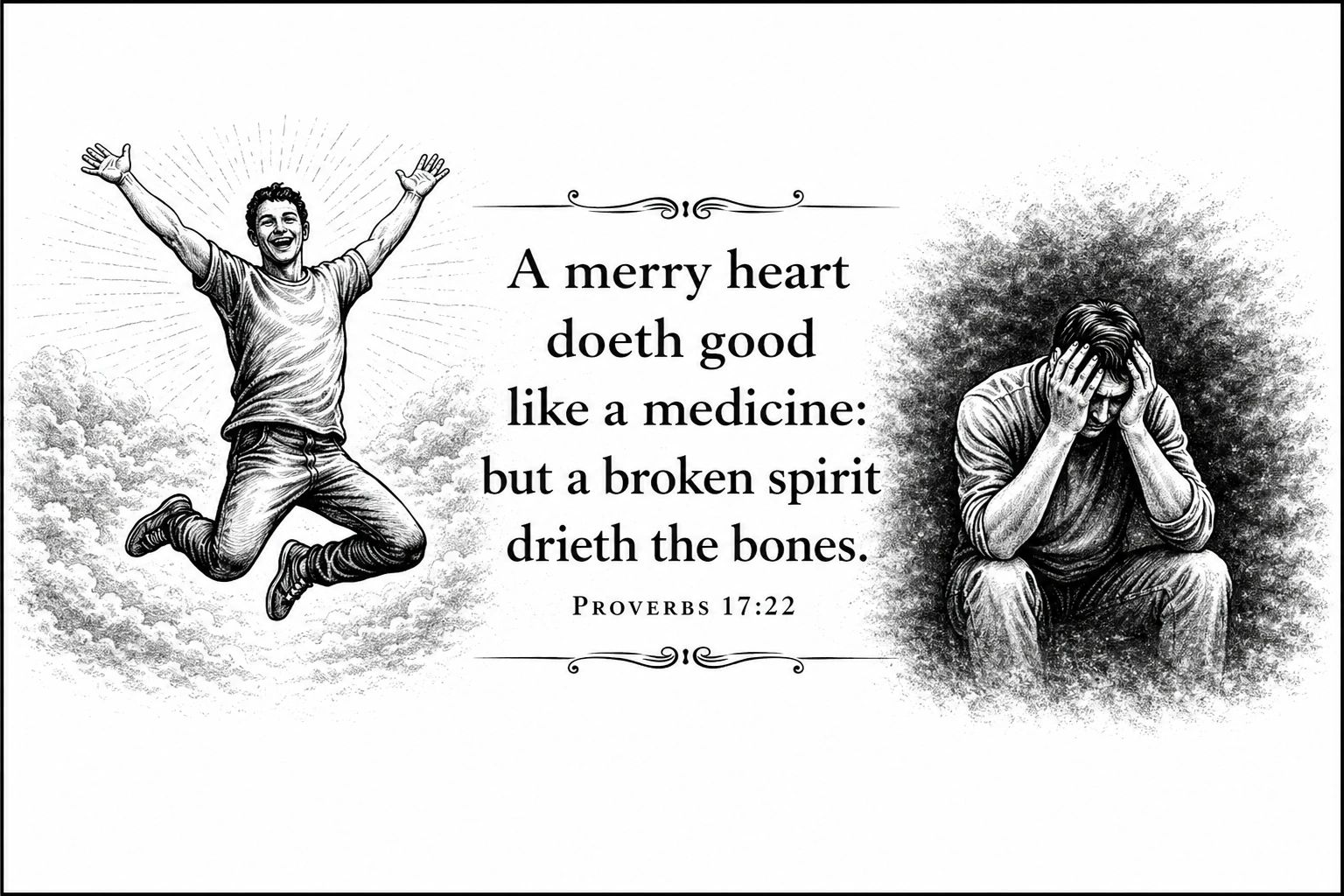
We often are told that pharmaceuticals are the answer to treating disease, when there are better ways that God placed in nature. As one author noted, "Pure air, sunlight, abstemiousness [temperance], rest, exercise, proper diet, the use of water, trust in divine power—these are the true remedies."1 Many Christian doctors have treated diseases and helped people obtain a healthy life using God's healing methods. These methods have been scientifically proven and do not have the negative side effects that are typically associated with pharmaceutical medication.
A Christian will need to ask God for discernment as many pharmaceuticals (synthetic, natural extracts, and supplements) are not only financially expensive, in addition to being costly to health. We also need to understand that God's herbs, foods, and methods bear His imprint, but man's formulations lead us to place faith and trust in man's science, often unwisely.
As drugs or pharmaceuticals do not cause immediate perceived harm, people believe they are curing the health condition. Ecclesiastes 8:11 says, "Because sentence against an evil work is not executed speedily, therefore the heart of the sons of men is fully set in them to do evil."
It is often through prolonged use of pharmaceuticals that detrimental side effects begin to manifest. Some of these are irreversible, and usually the course includes adding more pharmaceuticals to the drug regimen.
Each year in the United States, adverse drug events (ADEs), or harm resulting from medication use, cause approximately 1.5 million emergency department visits and 500,000 hospitalizations. Studies show ADEs cause 5-10% of hospital admissions, and in older adults, it can be as high as 30%.2
Besides the side effects, there are additional dangers to prescription drugs. Prescription drugs can be abused and overused, and frequently lead to unwanted dependencies.3 The children of God must never allow themselves to be brought under the habitual control of a substance (1 Corinthians 6:12).
There has been an explosion of extracts, tonics, tablets, sports formulations, and dietary supplements that people are using instead of conventional pharmaceuticals, believing they are taking a natural course. However, many contain contaminants such as metals, pesticides, dioxins and polychlorinated biphenyls (PCBs), and pharmacologically active ingredients.4
The "grandfather of modern medicine," Hippocrates, advocated food and exercise as the main treatments 2500 years ago. Hippocrates' advice to doctors was, "Practice two things in your dealings with disease: either help or do not harm the patient."5 With any medication decision, we need to do our own research so that we are not blindly trusting someone else's judgment of the 'minimal' risk. We need to compare it with a less risky, often more beneficial, lifestyle approach.
With 85% of older adults having at least one chronic health condition, our healthcare infrastructure is at a breaking point. Many diseases are caused by lifestyle, and can often be prevented, arrested or even reversed by a change in lifestyle (e.g. Type 2 diabetes, Hypertension, Cardiovascular disease, Obesity, Depression and anxiety).6 Infections and viruses do not drive these; they are due to poor behavioral choices. The American College of Lifestyle Medicine (ACLM) President, David Katz, MD, MPH, says,
"Lifestyle as medicine has the potential to prevent up to 80% of chronic disease; no other medicine can match that. In addition, it is potentially inexpensive and even cost-saving; free of all but good side effects; safe and appropriate for children and octogenarians alike. It is, quite simply, the best medicine we've got."7
As Sir (and Dr) William Osler, from John Hopkins Hospital once said (in 1893),
"The good physician treats the disease, the great physician treats the patient who has the disease."8
Ellen White, a prolific writer on health, wrote,
"The most exalted part of the physician's work is to lead the men and women under his care to see that the cause of disease is the violation of the laws of health and to encourage them to higher and holier views of life. Instruction should be given that will provide an antidote for the diseases of the soul as well as for the sickness of the body."9
The Top 10 prescribed medications in the US (and for the Western world) are for diseases that have more effective lifestyle treatment alternatives. The diseases include: high cholesterol, high blood pressure, type 2 diabetes, and reflux, among other lifestyle-related diseases.10
Cardio-metabolic diseases (CMD) tend to be managed with multiple medications, especially in older patients, which may increase the risk of further health issues. Drug interactions and non-adherence can lead to further progression of the disease state and the need for further pharmaceutical treatment. Lifestyle changes (Diet, exercise, sleep habits) are just as, if not more, effective as pharmacotherapy whilst reducing the risk of complications, side effects, and costs.11
The Diabetes Prevention Program, which included 3,234 participants, found that a structured lifestyle intervention led to a 58% reduction in the incidence of diabetes. This was more effective than medication, which only led to a 31% reduction.12
In a recent study of 40,000 adults with no history of cardiovascular disease, those who were prescribed medications were 82% more likely to become obese and 8% more likely to be physically inactive than adults not taking medications.13
It is faith that works by love (Galatians 5:6) that causes us to be obedient to all God's laws, including His health laws. It is a presumption when Christians use pharmaceuticals and other formulations to eliminate the consequences of a lifestyle of rebellion against God's health laws. No tablet will make up for lost sleep, counteract junk food, or compensate for a lack of exercise. No pill will provide the wonders of hormone regulation and mental clarity that outdoor activity will do. True medicine does not come in a man-made formula (Proverbs 17:22).
Elijah asked King Ahaziah, "Is it not because there is not a God in Israel, that ye go to enquire of Baalzebub the god of Ekron?" (2 Kings 1:3)
Costly Pharmaceuticals (synthetic or natural extracts) are often viewed as resolving a health crisis, when simple, inexpensive lifestyle treatments improve our health far more. The COVID-19 pandemic showed that medications became scarce, access to doctors decreased, hospitals were overwhelmed and sources of infection, and many people who didn't want the vaccine felt pressured to take the
medication or lose access to healthcare. As the world comes to an end, the Bible says faithful followers of Jesus will not be able to buy or sell — and that will include medications (Revelation 13:17). Where possible, Christians need to reduce any reliance on a healthcare system that will increasingly push medications as the cure, rather than drug-free approaches. Lifestyle treatments treat the root cause of disease, whilst medications can often lead to delays in adopting healthy lifestyle approaches. The medication may give a sense of feeling better for a time, but it is not a substitute for right living.
Many people don't want medications, but they also don't want to make lifestyle changes, and they need significant coaching and education on how to implement new changes. The most important help for these people is a connection with God, who can do what man cannot (Mark 10:27; Philippians 2:13).
Satan's way to deceive and dominate the world is shown in Revelation as "for by thy sorceries were all nations deceived" (Revelation 18:23). The word for sorceries here is pharmakeia,which is where we get the word pharmacy or medication, sorcery or magic.
In the end, a Christian's use of prescription drugs is between that Christian and the Lord. The Bible does not command the use of medicinal treatments, but it certainly does advise discernment in all we eat or drink or what our minds dwell on.
Patience is a fruit of the holy spirit (Galatians 5:22). We shouldn't allow impatience or convenience to drive our decision-making in times of stress and
fear. "God has not given us the spirit of fear but of power, love, and a sound mind" (2 Timothy 1:7). God pledges to help us in our health, as he made us and bought us, so we can be the temple of the Holy Spirit (1 Thessalonians 5:23; 1 Corinthians 6:19, 20).
D. de Bruyn (Adapted from The Captive Bride)
________
1 Ellen G. White, The Ministry of Healing (Mountain View, CA: Pacific Press Publishing Association, 1905), 127, para. 2,
2 Centers for Disease Control and Prevention, "FastStats: Medication Safety Data," last modified 2024, accessed December 25, 2025, https://www.cdc.gov/medication-safety/data-research/facts-stats/index.html.
3 Wilson M. Compton and Nora D. Volkow, "Abuse of Prescription Drugs and the Risk of Addiction," Drug and Alcohol Dependence83, Supplement 1 (June 2006): S4–S7, accessed January 3, 2026, https://www.sciencedirect.com/science/article/abs/pii/S037687160600055X
Comment Policy
Just a short read, click here to read