
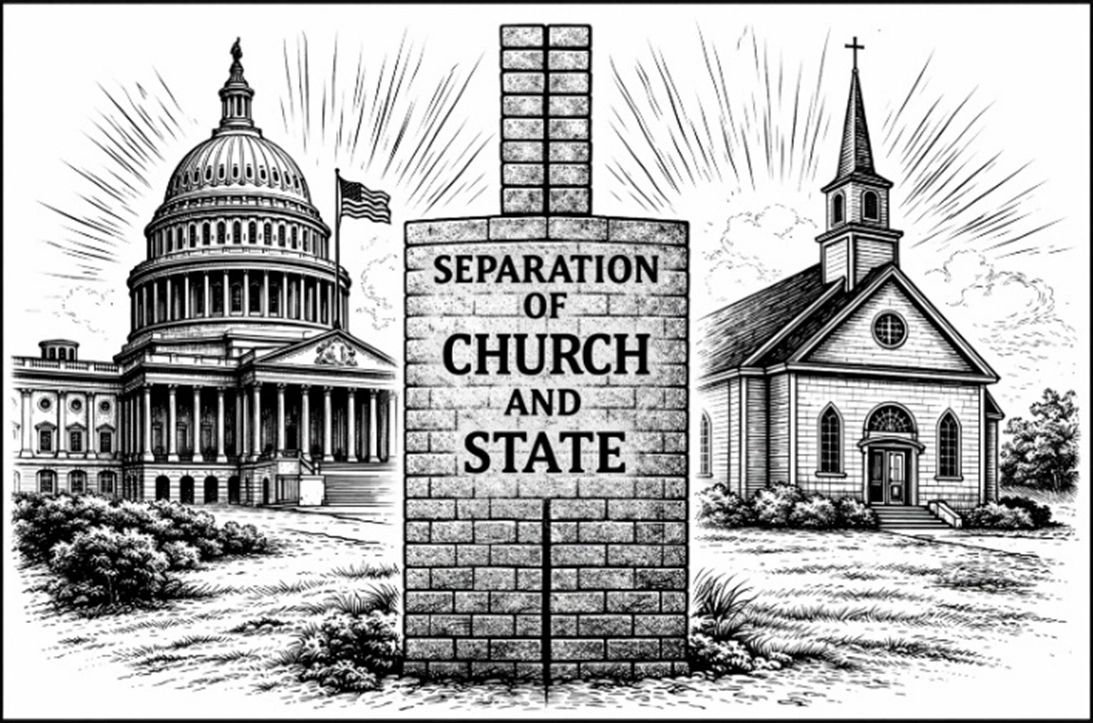
Faithful Seventh-day Adventists have always defended religious liberty and the separation of church and state. This position is not mainly political; it is biblical and spiritual. The Bible teaches that God created human beings with freedom of conscience, and therefore no earthly authority should force a person's faith or worship.
History also shows that when religious institutions gain political power, the result is often persecution, corruption of religion, and the loss of true faith. For these reasons, we as Adventists believe that the church must remain separate from the civil government.
God Gives Every Person Freedom of Choice
A central biblical principle is that God allows human beings to choose whether they will serve Him or not. Faith must come from the heart and cannot be forced.
The Bible shows us that Joshua told the people: "Choose you this day whom ye will serve" (Joshua 24:15).
This verse shows that God respects the individual choice. Throughout Scripture, God invites people to follow Him, but He never forces them. True obedience grows out of love and conviction, not compulsion.
A founding member of the Seventh-day Adventist church, Ellen G. White explains this principle clearly:
"God never forces the will or the conscience; but Satan's constant resort"¦ is compulsion." (The Great Controversy, p. 591)
If religion is enforced by law, it contradicts the very character of God. When the government tries to force belief, it violates the freedom of conscience that God Himself has given. In fact we encounter in the first angels' message of Revelation 14:6-7 the principle of freedom of conscience,
"And I saw another angel fly in the midst of heaven, having the everlasting gospel to preach unto them that dwell on the earth, and to every nation, and kindred, and tongue, and people, Saying with a loud voice, Fear God, and give glory to him; for the hour of his judgment is come: and worship him that made heaven, and earth, and the sea, and the fountains of waters."
The First Angel shows us "Freedom of Conscience" through the everlasting gospel. The gospel calls people, it does not compel them.
Jesus Separated Civil and Religious Authority.
One of the clearest teachings about this subject comes from Matthew 22:21, When the Pharisees tried to trap Him with a political question about taxes, Jesus replied: "Render therefore unto Caesar the things which are Caesar's; and unto God the things that are God's." Matthew 22:21
In this statement, Christ separated two different spheres of authority.
1 The government ("Caesar") has responsibility for civil matters such as law, order, and justice.
2 God who has authority over the conscience and worship of individuals.
Jesus did not teach that the state should control religion. Instead, He showed that civil authority and spiritual authority are distinct. When these two powers are combined, it usually leads to abuse.
Christ's Kingdom Is Not Political
Another important text appears in John 18:36. When Jesus stood before the Roman governor Pilate, He said, "My kingdom is not of this world." Christ made it clear that His kingdom was spiritual rather than political. He did not come to establish a political government or enforce religious laws through civil power. Instead, His mission was to change hearts and transform lives. He called people to experience the new birth.
This is an important lesson for the church today. When churches seek political control or attempt to enforce religion through government power, they move away from the example that Christ gave.
History Shows the Dangers of Church–State Union
History repeatedly demonstrates that the union of church and state leads to religious persecution. When religious institutions gain civil power, they often use that power to suppress those who disagree with them.
During the Middle Ages, the catholic church gained strong political influence. Events such as the Medieval Inquisition show how dangerous this union became. People who held different beliefs were imprisoned, tortured, or executed. These historical examples show why religious liberty is so important. When the church relies on government power, it often loses its spiritual character. This is why Faithful Adventists are against church and state-union.
True Worship Cannot Be Forced.
Another biblical principle is that true worship must come from sincere belief. A government law may control outward behavior, but it cannot change the heart. The apostle Paul wrote,
"Let every man be fully persuaded in his own mind." (Romans 14:5)
Faith involves personal conviction. People must believe because they are convinced by truth, not because they are pressured by law.
If religious practices are enforced by the state, people may follow them outwardly while their hearts remain unchanged. Such religion becomes empty and formal, rather than genuine faith.
The bible warns against Forced Worship by Church and State union.
Revelation 13 portrays a system in which people are pressured or forced to follow certain religious practices. This prophecy IS as a warning against the union of religious and civil power.
Ellen White wrote: "The image to the beast represents that form of apostate Protestantism which will be developed when the Protestant churches shall seek the aid of the civil power for the enforcement of their dogmas." The Great Controversy, p. 445
This statement highlights the danger of churches relying on government power to enforce their teachings.
She also warned: "When the leading churches"¦ unite upon such points of doctrine as are held by them in common, and shall influence the state to enforce their decrees"¦ then Protestant America will have formed an image of the Roman hierarchy." The Great Controversy, p. 445
The prophecy of the image of the beast shows how systems of forced worship can develop when church and state unite. Because of this biblical message, Faithful Adventists believe that protecting religious liberty and freedom of conscience is essential. True faith grows only where people are free to choose their beliefs without coercion.
I. Isaac
Comment Policy
Just a short read, click here to read